
"China agriculture"
2000 article(s) found

Do you know where coffee is grown in China? Yunnan is the most famous coffee grower.
In the impression of many people, coffee is a foreign proprietary product, which is not grown and produced in China. In fact, there are two growing places in China, Hainan and Yunnan. Yunnan is the most famous coffee growing place, and some coffee is also sold abroad. Yunnan coffee originated in 1892 and was grown in the valleys of Binchuan County by a French missionary. Up to now, there are still dozens of trees in Zhukula Township, Binchuan County.

Coffee introduced into China and Chinese Coffee Culture
There are several meanings to say that coffee was introduced into China: first, coffee was introduced into China and was initially consumed by European and American people who came to China; second, there were commercial cafes where ordinary people, Chinese and foreign people could drink and entertain themselves; and third, coffee was cultivated in the field in China, produced and sold for its own use.

Fine Coffee Common sense Chinese Herbal Coffee
Coffee is the first of the three major beverages in the world, one of the most important international trade commodities, and also an important raw material for medicine, food and light chemical industry. in history, there was only woody coffee in the world. and mainly produced in Colombia, Brazil, Indonesia and other countries near the equator, only a small amount of woody coffee is grown in subtropical areas such as Hainan and Yunnan, and coffee is not produced in most countries.
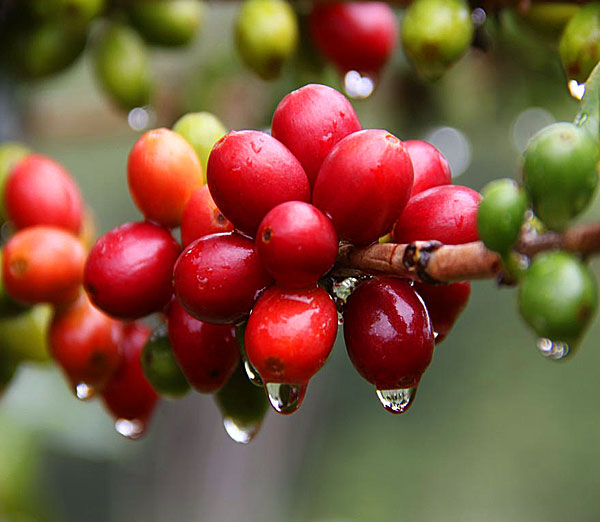
Development of Coffee in China Coffee production in Yunnan accelerates the development of coffee industry in Yunnan Province
Yunnan Province is the largest coffee bean production base in China. Recently, Yunnan Province has issued opinions to speed up the development of the coffee industry from the aspects of building a high-quality coffee bean production base, building leading enterprises, and upgrading the level of science and technology. The Coffee Industry Development Plan (20102020) issued by Yunnan Province proposes to build Yunnan into the raw material base of the world's high-quality coffee beans in the next ten years.

Coffee is one of the three largest drinks in the world. Nestle (China) Co., Ltd. Nestle Coffee Nescafe
Coffee is one of the three major drinks in the world. At first, coffee was expensive in Europe. Only aristocrats could drink coffee, and coffee was even called black gold. Coffee, which fell in price as a result of mass production, began to become an important drink for Europeans. Zhong Lirong, vice president of China Coffee and Coffee Beverage Professional Committee, said in an interview: comparatively speaking, Chinese people drink pure coffee.
Comprehensively improve the brand image of "China Coffee"
With the rise of Chinese economy and the integration of Chinese and Western cultures, the domestic coffee consumer population and consumer market are growing at a high speed.

Hainan Coffee Home-made Robusta beans are tested to reach the level of fine coffee by more than 80 points in the first professional cup.
Professional coffee knowledge exchange more coffee bean information please follow the coffee workshop (Wechat official account cafe_style) Haiken Dafeng Mother Mountain Coffee has been professionally evaluated to meet the international boutique standard black coffee juice slowly flowed out of the mocha pot, a long table up to 2 meters, more than a dozen coffee cups lined up, coffee fragrance spread, coffee professional cup testers are tasting and scoring in turn

Introduction of main Coffee producing areas in China introduction of Yunnan small grain coffee producing areas
Coffee cultivation in China is mainly concentrated in Yunnan and Hainan.

The Development History of Coffee in China: the Development History of Yunnan Fine Coffee and the taste of small Coffee
Professional coffee knowledge exchange more coffee bean information please follow the coffee workshop (Wechat official account cafe_style) Chinese coffee Yunnan Yunnan is one of the earliest provinces in China to grow coffee. At the end of the 19th century, missionaries from Europe went to Yunnan Dali and other places to preach, bringing coffee seeds to Yunnan. In the early stage after liberation, Lujiangba in Baoshan was successfully planted, and it was found that the adaptability was good.
Fight for the right to say the purchase price of coffee in Yunnan Province.
A coffee exchange will be set up in Shanghai Free Trade Zone. Pacorini, a well-known international warehousing operator in Italy, recently announced that it plans to join hands with the Shanghai agricultural products market to set up Asia's first coffee exchange in the Shanghai free trade zone. Hearing this news, Yunnan coffee enterprises are in a hurry, Yunnan coffee industry association is in a hurry, and so is the Kunming Coffee Trading Center, which was just listed on October 28. Whether it is

China Coffee Living Fossil "Zhu Kula" Opens Image Store to Promote Brand Construction
Professional barista exchange, please pay attention to coffee workshop (Weixin Official Accounts cafe_style), known as the living fossil of Chinese coffee, Zhukula Coffee Museum Store opened in Yunnan Province Museum, marking an important step in brand construction. Zhukula Village, Binchuan County, Yunnan Province, is an Yi village on the bank of Jinsha River tributary. hundred years ago

Yunnan Coffee Promotion event held in Beijing
Professional baristas exchange please follow the coffee workshop (Wechat official account cafe_style) Yunnan Network News yesterday, Yunnan coffee promotion event was held in Beijing. In February this year, the Ministry of Foreign Affairs and the provincial government held an open China: charm Yunnan World sharing Yunnan global promotion event, coffee and other Yunnan plateau characteristic agricultural products attracted the attention of consumers. The purpose of this event is to invite the industry

The third China Pu'er Coffee Cup World siphon Pot Competition kicked off in 2014.
China good Tea Network: from January 7 to 8, 2015, thousands of people in hundreds of cities drank Pu'er coffee and the third Chinese Pu'er Coffee Cup World siphon Pot Competition in 2014. Wang Xuesong, an assistant researcher at the Tea Institute Coffee Research Center of the Yunnan Academy of Agricultural Sciences, was invited by the organizing committee to serve as the sensory judge of the competition. After the preliminary round, 13 contestants entered the finals

China's coffee consumption has grown at an annual rate of 20%-much higher than the global growth rate of 2%.
In 2008, Huang Wenguang chose to enter Nankeng Reclamation Coffee Manor in Zhangzhou, Fujian Province, and began to grow local coffee. In his view, coffee is squeezing into the Chinese market, which is dominated by tea culture, and if coffee is to be truly successful in China, there must be a coffee bean that is more suitable for the Chinese population, and a local coffee brand with more Chinese characteristics is needed, on the one hand, the market demand for

The past Life and present Life of Baoshan Coffee the Story of the Development of Baoshan Coffee
Professional coffee knowledge exchange more coffee bean information Please pay attention to the coffee workshop (Wechat official account cafe_style) Baoshan, as one of the first areas in Yunnan to grow coffee, has been planting on a large scale since the 1950s and has a history of more than 60 years. According to exact historical records, Baoshan Coffee was first made in 1952 by the tropical and subtropical classics of Yunnan Province in the Gaoligong Mountain Resort.
Chinese people drink coffee China Coffee Network Coffee introduced into China Coffee Trading Network
Coffee was introduced into China from the perspective of language, the Kangxi Dictionary has neither the word caf é, nor the word coffee, let alone the word coffee, which shows that the Chinese people in the early Qing Dynasty were not exposed to coffee. Whether there is any coffee (beverage) in China in the middle of the Qing Dynasty is still under search. The author carefully examines several characters from the middle to the end of the Qing Dynasty in the Integration of colloquial dictionaries of the Ming and Qing dynasties published by Shanghai Ancient Books Publishing House in 1989.

Yunnan coffee output value is expected to reach 35 billion yuan in 2020
China is one of the countries with the fastest growth in coffee consumption in the world, with a recent consumption of 90,000 tons of coffee, which is still relatively low compared with major Asian consumers such as Japan and South Korea. However, China's coffee consumption is growing at a rate of more than 20% per year, far higher than the world's 3% growth level, and the market space is huge. According to the analysis of global coffee production and marketing situation, by 2020, cloud

The first wave of instant coffee in the world is not in South Korea, and its market share is down 9.4% from the same period last year.
China Economic Network, Beijing, Dec. 8 (Reporter Wu Jing) according to Yonhap news agency, the industry data released by South Korea's Ministry of Agriculture, Food and Rural Affairs (Ministry for Agriculture, Food and Rural Affairs, hereinafter referred to as MAFRA) on Tuesday showed that although South Korea's total coffee consumption showed an upward trend in 2015, the market share of instant coffee continued to decline.
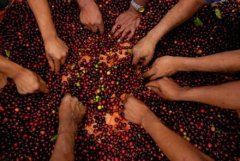
Chinese coffee has ushered in a recovery period with the country's reform and opening up.
From December 18 to 22, 1978, the third plenary session of Communist Party of China's 11th Central Committee was held in Beijing. The main achievements of this conference are: re-establishing the party's Marxist ideological line. The plenum resolutely criticized the two general erroneous policies, spoke highly of the discussion on the standard of truth, and determined to emancipate the mind, use the brain, seek truth from facts,
Analysis on the Development Environment and advantages of Coffee Industry in Yunnan Province
Analysis on the development of coffee consumption at home and abroad from an international point of view, the world is in a trend of steady growth.